Dental implants are widely regarded as one of the most reliable and long-lasting solutions for replacing missing teeth. They restore function, improve appearance, and help preserve oral health. However, the success of dental implants is not determined by the procedure alone. Several factors influence how well an implant heals and performs over time, and one of the most significant among them is smoking.
If you have been researching smoking and dental implants, you may have come across conflicting information. Some people believe smoking automatically disqualifies them from getting implants, while others assume it has little impact on treatment success. The truth lies somewhere in between.
Smoking does not necessarily prevent you from getting dental implants, but it can significantly affect implant healing, increase the risk of complications, and reduce the overall implant success rate. Understanding these risks can help you make informed decisions and improve your chances of achieving a successful outcome.
In this guide, we’ll explore how smoking affects dental implants, what complications can arise, and what steps smokers can take to improve treatment success.
Understanding Dental Implants and How They Heal
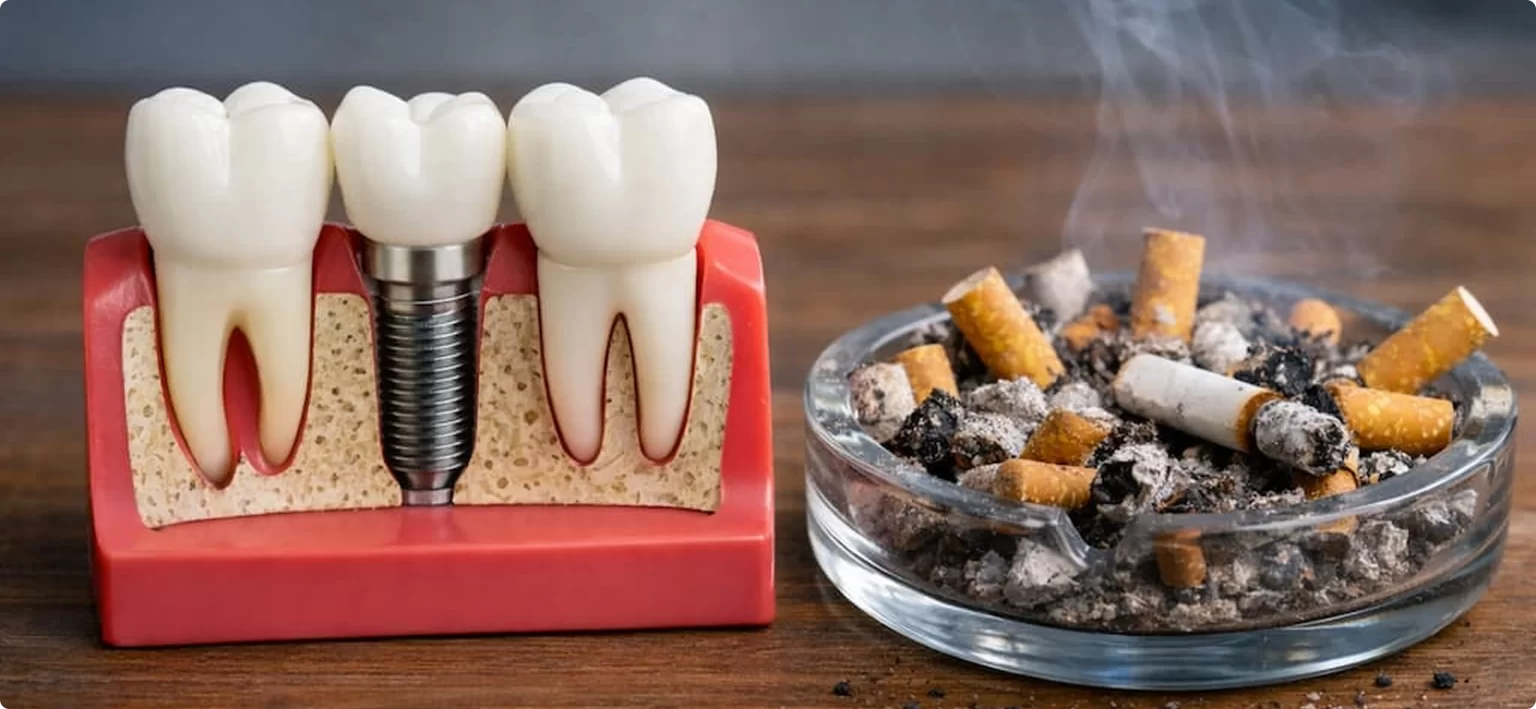
A dental implant is a titanium post that is surgically placed into the jawbone to replace the root of a missing tooth. Over time, the implant fuses with the surrounding bone through a natural process called osseointegration.
This healing phase is one of the most important stages of implant treatment. During this period, the jawbone gradually grows around the implant, creating a stable support system that allows the implant to function like a natural tooth root.
For successful healing to occur, the body needs:
- Healthy blood circulation
- Strong and healthy bone support
- Healthy gums
- Good oral hygiene
- Minimal inflammation
Anything that interferes with these factors can affect the stability and longevity of the implant. This is where smoking becomes a concern.
How Smoking Affects Oral Health
Before discussing dental implants specifically, it’s important to understand the broader effects of smoking on oral health.
Tobacco products contain thousands of chemicals that can negatively impact the mouth and surrounding tissues. Smoking is known to:
- Reduce blood flow to the gums
- Slow down tissue repair
- Raise the risk of gum disease
- Delay wound healing
- Increase the likelihood of oral infections
Over time, these effects can weaken the structures that support your teeth and implants.
Many smokers may not notice these changes immediately, but they can have a significant impact on the body’s ability to heal after dental procedures.
The Connection Between Smoking and Dental Implants
The relationship between smoking and dental implants is closely tied to healing and long-term stability.
Unlike natural teeth, implants rely entirely on successful integration with the jawbone. If healing is disrupted, the implant may fail to bond properly with the bone, reducing its stability and increasing the risk of complications.
Smoking affects several critical processes that are necessary for implant success:
- Blood circulation
- Oxygen delivery to tissues
- Bone regeneration
- Gum health
- Immune response
When these processes are compromised, the body may struggle to heal efficiently after implant placement.
This doesn’t mean every smoker will experience implant failure. However, the risks are undeniably higher compared to non-smokers.
Why Implant Healing Is So Important
When patients think about dental implants, they often focus on the final restoration—the visible tooth that completes their smile.
However, the long-term success of an implant depends heavily on what happens beneath the surface during healing.
The implant must become securely integrated with the surrounding bone. Healthy gum tissue must also heal around the implant to create a protective seal against bacteria and infection.
If healing is interrupted or incomplete, problems may arise such as:
- Implant instability
- Bone loss
- Gum recession
- Infection
- Implant failure
This is why dentists place such a strong emphasis on the healing phase and closely monitor patients during recovery.
How Smoking Impacts Implant Healing
Reduced Blood Flow
One of the most harmful effects of smoking is reduced blood circulation.
Nicotine causes blood vessels to constrict, limiting the flow of oxygen-rich blood to the healing tissues. Since blood carries nutrients and oxygen that support repair, reduced circulation can slow the healing process considerably.
This delayed healing can make it more difficult for the implant to integrate properly with the jawbone.
Slower Tissue Repair
Healthy gums play a critical role in protecting dental implants.
Smoking slows the body’s ability to repair damaged tissues, meaning gum tissues may take longer to heal after surgery. This can increase leakage of soft tartar from adjacent tooth surface to implant site.
Delayed Bone Integration
The success of dental implants depends on strong bone integration.
Smoking can affect bone metabolism and regeneration, slowing the process through which the implant fuses with the jawbone. In some cases, this may prevent successful osseointegration altogether.
Smoking and Implant Success Rate
Research consistently shows that smokers generally have a lower implant success rate than non-smokers.
While modern implant dentistry has achieved remarkably high success rates overall, smoking remains one of the most common risk factors associated with implant complications.
Studies have found that smokers are more likely to experience:
- Early implant failure
- Delayed healing
- Increased bone loss
- Higher rates of peri-implant disease
However, it is important to remember that smoking does not guarantee implant failure. Many smokers successfully receive dental implants, especially when appropriate precautions are taken before and after treatment.
The key difference often lies in the level of planning, patient commitment, and post-operative care.
Common Implant Complications in Smokers
Implant Failure
Implant failure occurs when the implant does not successfully integrate with the bone or loses stability over time.
Smoking increases the likelihood of both early and late implant failure.
Peri-Implantitis
Peri-implantitis is an inflammatory condition that affects the tissues surrounding a dental implant.
If left untreated, it can lead to bone loss and eventual implant failure.
Smokers have a higher risk of developing peri-implantitis due to increased bacterial activity and reduced healing capacity.
Gum Recession
Smoking can contribute to gum recession around implants.
As gum tissue recedes, the implant may become more exposed, affecting both appearance and long-term stability.
Bone Loss
Healthy bone support is essential for maintaining implant stability.
Smoking can accelerate bone loss, which may weaken the support structure around the implant over time.
Can Smokers Still Get Dental Implants?
Yes, smokers can still be candidates for dental implants.
However, treatment planning often requires additional evaluation and preparation.
Your dentist may assess:
- Bone density
- Gum health
- Smoking frequency
- Overall medical history
- Oral hygiene habits
Based on these findings, they can determine whether implants are appropriate and what steps may improve the chances of success.
Being a smoker does not automatically eliminate your eligibility for implants, but it does require a more cautious and personalized approach.
How Long Should You Stop Smoking Before and After Implant Surgery?
Many dentists recommend reducing or stopping smoking before implant placement whenever possible.
While recommendations vary depending on the patient, it is often advised to:
- Stop smoking at least one to two weeks before surgery
- Avoid smoking during the early healing period
- Continue avoiding smoking for several weeks after placement
The first few weeks after surgery are particularly important because this is when the body begins the healing and integration process.
Even a temporary reduction in smoking during this period may improve healing outcomes.
Tips to Improve Implant Success for Smokers
If quitting completely is difficult, there are still several ways to improve your chances of successful implant treatment:
Maintain Excellent Oral Hygiene
Brush and floss regularly to minimize bacterial buildup.
Attend Regular Dental Checkups
Frequent monitoring allows your dentist to identify and address potential issues early.
Follow Post-Operative Instructions Carefully
Adhering to your dentist’s instructions can significantly improve healing.
Reduce Smoking Before and After Surgery
Even reducing tobacco use during the critical healing phase may help support recovery.
Address Gum Disease First
Healthy gums create a more favorable environment for implant treatment.
Why Proper Planning Matters for Smokers
For smokers, successful implant treatment begins long before the implant is placed.
Comprehensive evaluation, digital imaging, and careful treatment planning help dentists identify potential challenges and create strategies to manage them effectively.
By assessing factors such as bone quality, gum health, and overall oral condition, dentists can improve treatment predictability and reduce complications.
This proactive approach becomes especially important for patients with additional risk factors such as smoking.
Why Choose Hansalia Dental Clinic for Dental Implants?
Dental implant treatment requires more than simply placing an implant. It requires a thorough understanding of each patient’s oral condition and the factors that may influence healing and long-term success.
At Hansalia Dental Clinic in Baner Pune, every implant case begins with a comprehensive evaluation. The team carefully assesses bone quality, gum health, oral hygiene status, and lifestyle factors—including smoking habits—before recommending treatment.
Using advanced diagnostic technology and digital imaging, the clinic develops personalized treatment plans that prioritize precision, stability, and long-term outcomes. This detailed approach helps identify potential challenges early and allows for better planning throughout the treatment journey.
For smokers, this level of assessment becomes particularly valuable. By understanding how smoking may affect healing and implant integration, the team can provide tailored guidance to help patients improve their chances of success.
Combined with experienced dental professionals, modern techniques, and a strong commitment to patient care, Hansalia Dental Clinic focuses on creating conditions that support predictable healing and lasting implant stability.
Final Thoughts
The relationship between smoking and dental implants is clear: smoking can increase risks, slow implant healing, and reduce the overall implant success rate.
However, smoking does not automatically mean dental implants are not an option.
With proper evaluation, careful treatment planning, good oral hygiene, and a commitment to following professional advice, many smokers can still achieve successful implant outcomes.
The most important step is to work with an experienced dental team that understands the unique challenges smoking presents and can guide you through every stage of the process.
A successful dental implant is not determined by the procedure alone—it is the result of careful planning, healthy healing, and long-term maintenance.
Frequently Asked Questions
1. Can smokers get dental implants?
Yes, smokers can receive dental implants, although they may face a higher risk of complications compared to non-smokers.
2. Does smoking affect implant healing?
Yes, smoking can slow healing by reducing blood flow and oxygen delivery to the tissues.
3. Does smoking lower the implant success rate?
Research shows that smokers generally have a lower implant success rate than non-smokers.
4. Should I stop smoking before dental implant surgery?
Most dentists recommend reducing or stopping smoking before and after surgery to improve healing.
5. What is the biggest risk of smoking after implant placement?
Smoking can increase the risk of infection, delayed healing, bone loss, and implant failure.
6. How long should I avoid smoking after implants?
Your dentist may recommend avoiding smoking for 1-2 weeks after surgery, especially during the early healing phase.
7. Can a failed implant be replaced?
In many cases, yes. However, the cause of failure must first be identified and addressed.
8. How can smokers improve their chances of implant success?
Maintaining excellent oral hygiene, attending regular dental visits, reducing smoking, and following post-operative instructions can significantly improve outcomes.