Losing a front tooth can be a distressing experience. Unlike missing teeth at the back of the mouth, a missing front tooth affects not only your ability to bite and speak properly but also your confidence in everyday interactions. Whether the tooth is lost due to an accident, decay, gum disease, or a failed dental treatment, replacing it quickly and effectively becomes a priority.
Modern dentistry offers several solutions for replacing missing front teeth, but one of the most advanced and reliable options is a front tooth dental implant. Designed to look, feel, and function like a natural tooth, dental implants have become a preferred choice for patients seeking long-term results.
In this guide, we’ll explore everything you need to know about front tooth dental implants, including their benefits, treatment process, important considerations, and why proper planning plays a critical role in achieving long-term success.
Why Front Teeth Require Special Attention
Replacing a front tooth is often more complex than replacing a tooth in other areas of the mouth. Since front teeth are highly visible, achieving a natural-looking result requires careful planning, precise placement, and close attention to both the supporting structures and the final restoration.
When someone smiles, talks, or laughs, the front teeth and surrounding gums are immediately noticeable. Even minor irregularities in shape, alignment, gum contour, or tooth position can affect the overall appearance of the smile.
This means that replacing a front tooth isn’t simply about filling a gap. It involves carefully restoring:
What Is a Front Tooth Dental Implant?
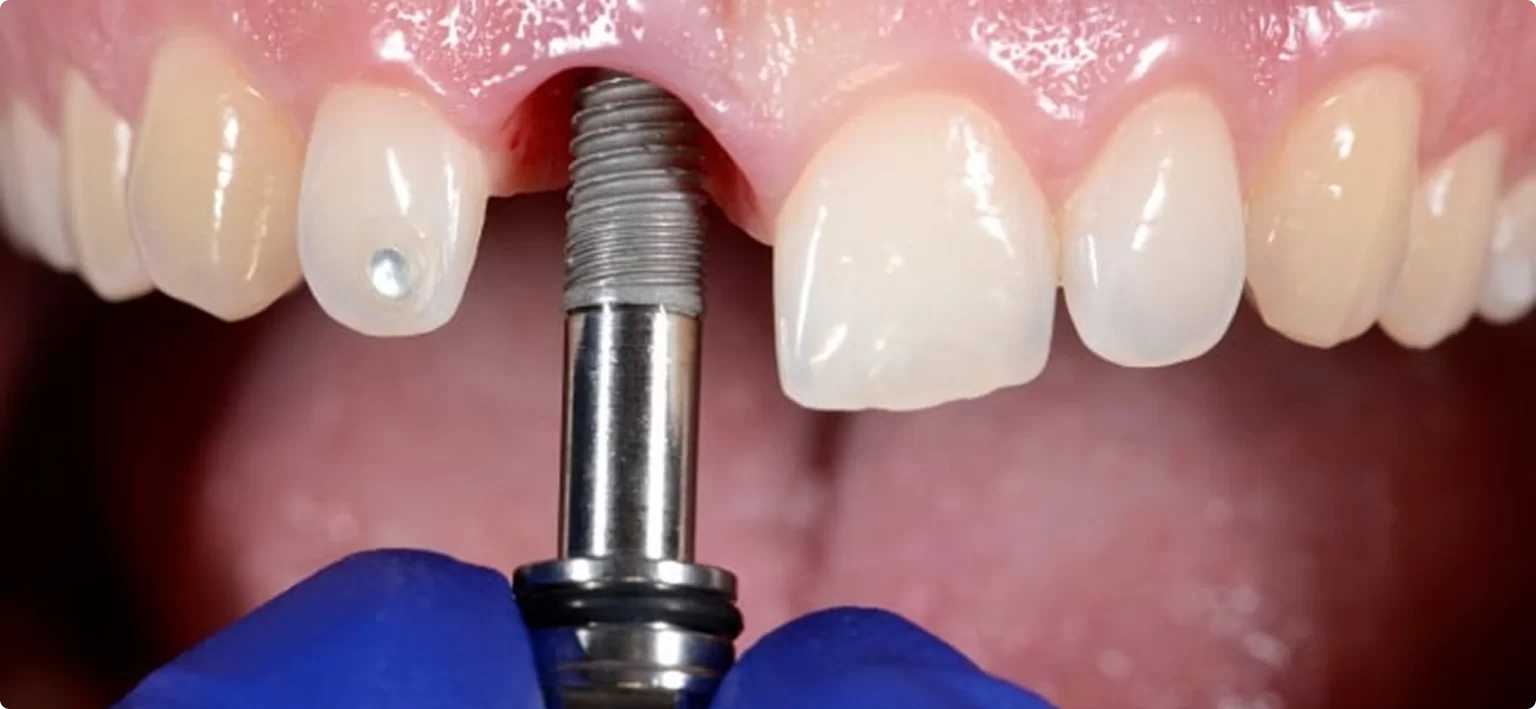
A front tooth dental implant is a dental implant specifically used to replace a missing tooth in the front region of the mouth, often referred to as the anterior region.
The treatment involves three main components:
- The implant fixture (titanium post)
- The abutment (connector)
- The dental crown (visible tooth)
The titanium implant is placed into the jawbone where it acts as an artificial tooth root. Once healing is complete and the implant integrates with the bone, a custom-designed crown is attached to create a natural-looking replacement tooth.
The goal is to ensure that the replacement tooth blends seamlessly with the surrounding natural teeth in terms of shape, color, size, and position.
Common Reasons for Front Tooth Loss
Front teeth may be lost for a variety of reasons, including:
Dental Trauma
Sports injuries, falls, road accidents, and other impacts can result in fractured or knocked-out front teeth.
Advanced Tooth Decay
Untreated cavities can weaken a tooth to the point where it cannot be saved.
Gum Disease
Severe periodontal disease can damage the supporting structures around a tooth, leading to tooth loss.
Failed Root Canal Treatment
In some cases, a previously treated tooth may become infected or structurally compromised.
Congenital Absence
Some individuals are born without certain permanent teeth, making implants a suitable replacement option later in life.
Regardless of the cause, timely replacement is important to maintain both function and oral health.
Benefits of a Front Tooth Dental Implant
Natural Appearance
One of the biggest advantages of a front tooth dental implant is its ability to closely mimic a natural tooth.
Modern implant crowns are carefully customized to match the color, shape, and texture of your surrounding teeth, creating a highly aesthetic result.
Preserves Jawbone Health
When a tooth is lost, the jawbone underneath can begin to shrink over time.
Dental implants stimulate the bone much like natural tooth roots, helping preserve bone volume and facial structure.
Improved Speech
Missing front teeth can affect pronunciation and speech clarity.
Implants restore proper tooth positioning, helping patients speak naturally and confidently.
Better Chewing Function
A front tooth implant restores normal biting and chewing function, allowing patients to enjoy their daily activities without difficulty.
Long-Term Solution
With proper care and maintenance, dental implants can last for decades, making them one of the most durable tooth replacement options available.
Enhanced Confidence
Many patients report improved self-confidence after replacing a missing front tooth because they no longer feel self-conscious about smiling or speaking.
Why Precision Matters for Front Tooth Implants
While all implants require accuracy, precision becomes even more important when placing implants in the front of the mouth.
A successful result depends on several factors:
- Implant angle
- Implant depth
- Bone quality
- Gum tissue support
- Crown design
- Smile line
Even slight variations in implant placement can affect the final appearance.
For this reason, dentists often spend significant time planning front tooth implant cases before treatment begins.
Advanced imaging and digitally planned surgical guides help ensure the implant is positioned correctly to support both function and aesthetics.
Important Considerations Before Getting a Front Tooth Dental Implant
Bone Quality and Volume
The jawbone provides support for the implant.
If significant bone loss has occurred after tooth loss, bone grafting may be recommended before implant placement.
Gum Health
Healthy gums play a major role in creating natural-looking results.
Inflamed or unhealthy gums may need treatment before implant therapy begins.
Smile Line
A patient’s smile line determines how much of the gums are visible when smiling.
Higher smile lines often require even greater precision to achieve natural aesthetics.
Adjacent Teeth
The condition and position of neighboring teeth influence implant placement and crown design.
Timing of Treatment
In some cases, implants can be placed shortly after tooth extraction. In others, healing may be required first.
A thorough evaluation helps determine the best treatment timeline.
Front Tooth Dental Implant Procedure: Step-by-Step
Consultation and Assessment
The process begins with a comprehensive dental examination.
Digital scans, CBCT, and clinical evaluations help determine whether an implant is the right option.
Treatment Planning
The dentist develops a customized surgical guide and treatment plan based on bone condition, gum health, and aesthetic requirements.
Implant Placement
The titanium implant is carefully placed into the jawbone under local anesthesia.
Healing and Integration
Over the next few months, the implant integrates with the surrounding bone through osseointegration.
Crown Placement
Once healing is complete, a custom-made crown is attached to complete the restoration.
The final result is designed to match the appearance and function of your natural teeth.
Recovery After Front Tooth Implant Treatment
Recovery varies from patient to patient, but most individuals experience only mild discomfort following implant placement.
Common post-treatment symptoms that subside in 3-5 days include:
- Mild swelling
- Temporary soreness
- Minor tenderness
Most patients return to their normal routine within a few days.
Complete integration of the implant with the bone typically occurs over 4 – 6 months, during which regular follow-up visits help monitor healing progress.
Front Tooth Dental Implant vs Dental Bridge
When replacing a missing front tooth, patients often compare implants with dental bridges.
Front Tooth Dental Implant
- Independent tooth replacement
- Preserves jawbone
- Does not affect neighboring teeth
- Long-lasting solution
- Natural feel and function
Dental Bridge
- Supported by adjacent teeth
- Faster treatment process
- Lower initial cost
- No surgery required
- May require replacement over time
| Front Tooth Dental Implant | Dental bridge |
| Independent tooth replacement | Dependent tooth replacement |
| Preserves jaw bone | Does not preserve jaw bone |
| Does not affect neighbouring teeth | Affects neighbouring teeth |
| Long lasting solution | Short-term solution that requires replacement |
| Mimics the feel of a natural tooth and function | Does not mimic the feel of a natural tooth and function |
| Non-invasive surgery required | No surgery required |
| One time investment | Lower initial cost which requires replacement every 10-12 years |
While both options can restore appearance and function, implants are often preferred for their long-term benefits and ability to preserve surrounding structures.
How Long Does a Front Tooth Dental Implant Last?
One of the biggest advantages of dental implants is their longevity.
With proper oral hygiene and regular dental care, a front tooth dental implant can last for decades and, in many cases, a lifetime.
Factors that influence longevity include:
- Oral hygiene habits
- Gum health
- Bone support
- Lifestyle factors
- Regular dental checkups
Investing in proper maintenance helps maximize the lifespan of the implant.
Why Choose Hansalia Dental Clinic for Front Tooth Dental Implants?
Replacing a front tooth requires a balance of function, precision, and aesthetics. At Hansalia Dental Clinic in Baner, Pune, implant treatment begins with a detailed evaluation rather than a one-size-fits-all approach.
The team carefully assesses bone quality, gum condition, smile dynamics, and the position of adjacent teeth before planning treatment. This comprehensive approach helps create a stable foundation for the implant while also supporting a natural-looking outcome.
Using advanced digital imaging, modern diagnostic tools, and surgical guides, every aspect of implant placement is planned with precision. This is especially important for anterior implants, where even minor differences in positioning can influence the final appearance of the smile.
The clinic focuses on achieving results that not only look natural on the day the crown is placed but continue to remain stable and functional for years to come. By combining clinical expertise, advanced technology, personalized treatment planning, and patient-centered care, Hansalia Dental Clinic helps patients restore missing front teeth with confidence.
Final Thoughts
A missing front tooth can impact far more than just your appearance. It can affect your confidence, speech, oral function, and overall quality of life.
A front tooth dental implant offers one of the most effective solutions available today, providing a natural-looking, durable, and functional replacement. However, successful treatment depends on much more than simply placing an implant.
Bone support, gum health, implant positioning, smile design, and careful treatment planning all contribute to achieving a result that looks natural and remains stable over the long term.
If you’re considering treatment for a missing front tooth, consulting an experienced dental professional can help you understand your options and determine the best path forward for your individual needs.
Frequently Asked Questions
1. What is a front tooth dental implant?
A front tooth dental implant is a titanium implant used to replace a missing tooth in the front area of the mouth, restoring both appearance and function.
2. Are front tooth implants safe?
Yes, dental implants are considered a safe and highly predictable treatment when performed by experienced professionals.
3. How long does a front tooth implant last?
With proper care and maintenance, a front tooth implant can last for decades or even a lifetime.
4. Is a front tooth dental implant painful?
The procedure is typically performed under local anesthesia, making it comfortable for most patients with a 3-5 day recovery period.
5. Can front tooth implants look natural?
Yes. Modern implant crowns are custom-designed to match the color, shape, and appearance of surrounding teeth.
6. What are anterior implants?
Anterior implants are dental implants placed in the front region of the mouth to replace missing front teeth.
7. How long does treatment take?
Treatment duration varies depending on healing and individual circumstances but typically takes 4-6 months from implant placement to final restoration.
8. Are dental implants better than bridges for front teeth?
In many cases, implants offer long-term advantages because they preserve bone and do not require alteration of healthy neighboring teeth. However, the best option depends on each patient’s specific condition.